The Floor Is Only the Start
Sixty five points lets you lodge an Expression of Interest. It does not promise an invitation, so aim higher wherever you can.

Work out your Australian skilled migration points for the subclass 189, 190 and 491 visas. Pick the option that fits you in each category and your three visa scores update instantly, with the combined employment cap applied for you.
Choose the option that matches your profile in each category. Your subclass 189, 190 and 491 scores update the moment you make a change.
Your base score meets the 65 point minimum. An actual invitation depends on occupation demand and SkillSelect round results.
This calculator is a planning aid, not migration advice. Every score comes from the options you choose. Point rules, occupation lists and invitation results change over time, so always confirm your figure with the official Department of Home Affairs calculator before you lodge an Expression of Interest.
The tool walks through each part of the official points test in order, adds your factors together, and applies the combined employment cap so the number you see reflects the real rules.
Choose your age band, English level and highest qualification. These three factors form the base of every visa score.
Enter your Australian and overseas work in your nominated occupation. The shared cap of 20 points is applied for you automatically.
Add partner status, Australian study, regional study, a Professional Year, STEM research or a NAATI credential where they apply to you.
Subclass 189, 190 and 491 update live. The best fit is highlighted, with a full breakdown of where every point comes from.
See how far you sit above or below the 65 point floor, then focus on the factors that can lift you into a competitive range.
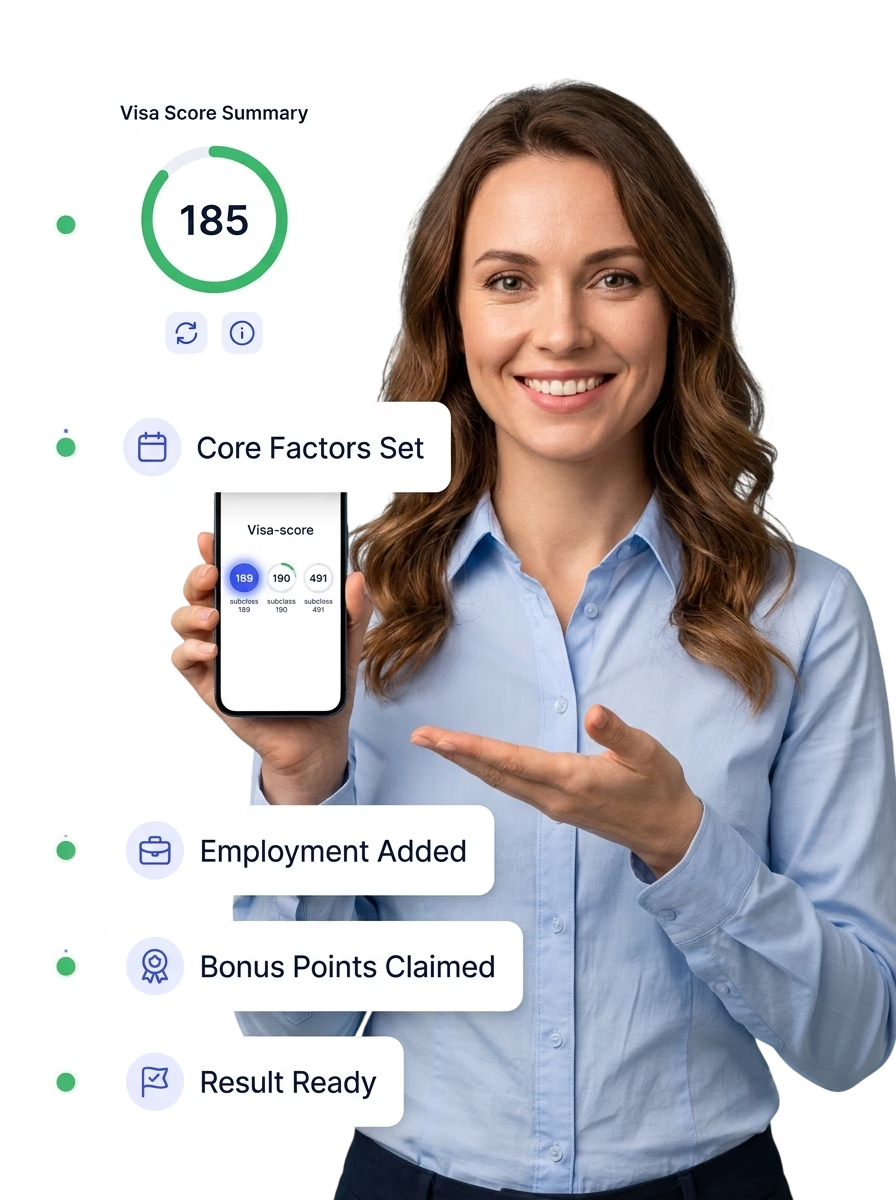
Your score decides whether you can lodge an Expression of Interest and how well you rank against other applicants in the same occupation. A clear read on your points helps you plan the right visa and the right timing.
Sixty five points lets you lodge an Expression of Interest. It does not promise an invitation, so aim higher wherever you can.
Invitations depend on your ranking within your ANZSCO occupation. Popular codes clear at scores well above the minimum.
Seeing all three scores side by side shows whether an independent, state nominated or regional visa gives you the best route.
Each factor you claim must be supported by real documents. Knowing your score early tells you what proof to gather.
Age bands, English validity and years of experience all shift over time. A clear score helps you act before points slip away.
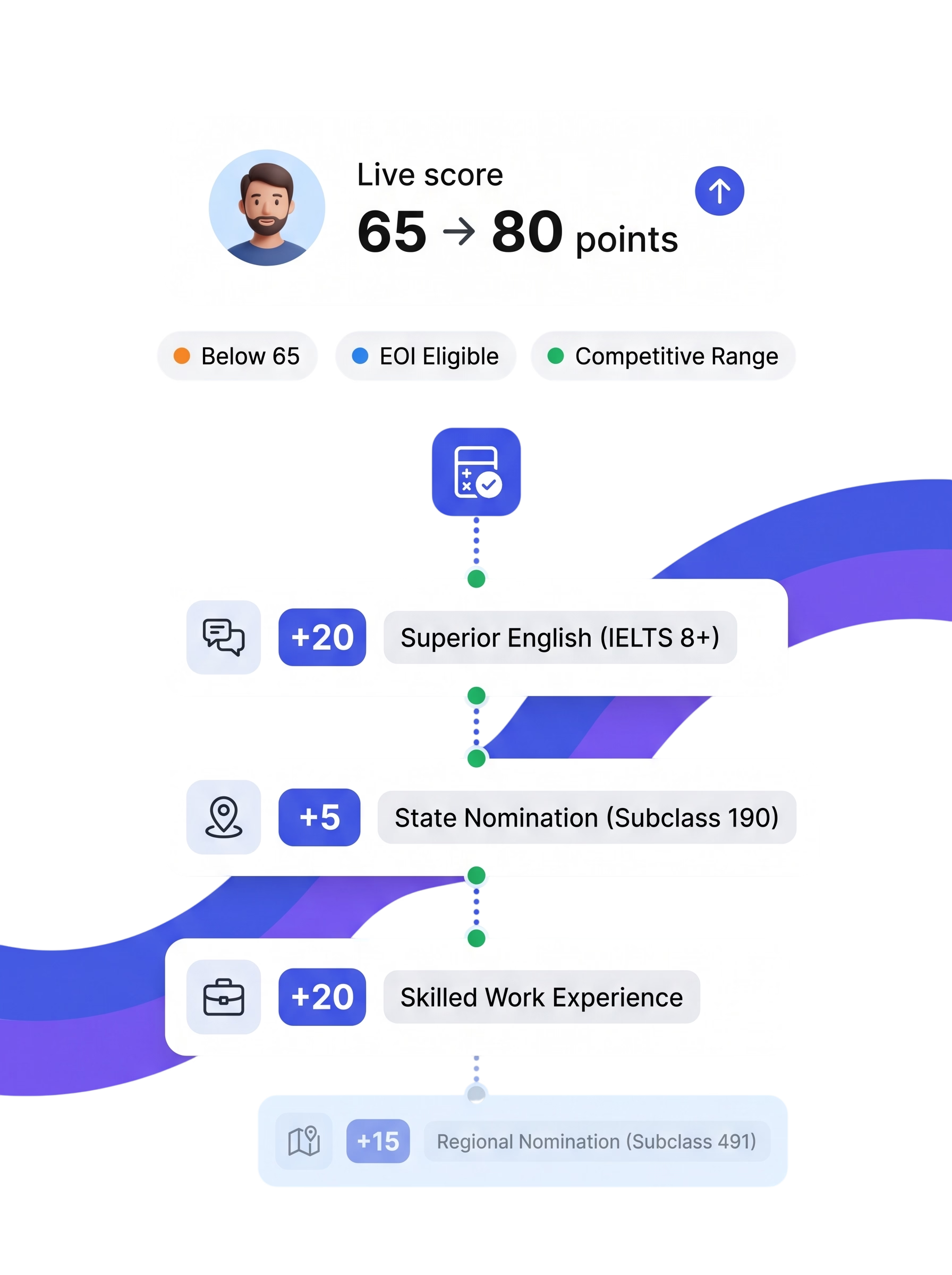
Moving from Competent to Proficient adds 10 points, and Superior adds 20. For many applicants a stronger English result is the fastest single gain, so a well prepared resit often pays off.
Subclass 190 nomination adds 5 points and subclass 491 adds 15. Each state runs its own occupation list and criteria, so check where your ANZSCO code is currently in demand.
If your partner gains a skills assessment with competent English, that is 10 points. Single applicants, and those with an Australian citizen or permanent resident partner, also receive 10 points.
A positive CDR or ACS RPL result is needed before you can claim occupation and employment points. Start early, since an assessment usually takes several weeks to complete.
Two or more academic years at a recognised institution can add 5 points, with a further 5 for designated regional study. A Professional Year, STEM research, or a NAATI credential can each add more.
Never overclaim. Every point in your Expression of Interest must be backed by documents such as reference letters, payslips, contracts and test results. An incorrect claim can lead to refusal.
This tool suits anyone weighing up an Australian skilled visa who wants a fast, honest read on their points before committing time to an Expression of Interest or a skills assessment.
Check where your points sit while you plan your Competency Demonstration Report for Engineers Australia, then target the gaps that matter most.
Estimate your score alongside your ACS assessment so employment, qualification and English points all line up with your nominated occupation.
See how Australian study, regional study and a Professional Year lift your total, and which visa subclass fits your current profile.
Compare your overseas experience and English options before you invest in an assessment, so you know the score you are working toward.
A points estimate misleads when it counts something the rules do not allow. Check your figure against these common errors before you rely on it for an Expression of Interest.
The floor lets you lodge, not win an invitation. Plan for the score your occupation actually clears at, not the minimum.
Australian and overseas work share one cap of 20 points. Adding them beyond that overstates your total. This tool applies the cap for you.
Only skilled work in your nominated occupation, counted after a positive assessment, earns employment points. Earlier years usually do not count.
Partner points need a matching skills assessment and English level. Read the criteria before you add 5 or 10 points to your score.
Points depend on your real test result in every band, not your best guess. Sit or confirm your test before you count 10 or 20 points.
State nomination lists differ from the national list and change often. A 190 or 491 score means little if your code is not open.
Use this table to check the factor behind every score. Always confirm the current values at the Department of Home Affairs before lodging your Expression of Interest.
| Category | Factor | Points |
|---|---|---|
| Age | 25 to 32 years | 30 |
| Age | 18 to 24 or 33 to 39 years | 25 |
| Age | 40 to 44 years | 15 |
| English | Superior (IELTS 8 or PTE 79 each) | 20 |
| English | Proficient (IELTS 7 or PTE 65 each) | 10 |
| Education | Doctorate (PhD) | 20 |
| Education | Bachelor or Master degree | 15 |
| Education | Diploma or trade qualification | 10 |
| Australian employment | 8 or more years | 20 |
| Australian employment | 5 to under 8 years | 15 |
| Australian employment | 3 to under 5 years | 10 |
| Australian employment | 1 to under 3 years | 5 |
| Overseas employment | 8 or more years | 15 |
| Overseas employment | 5 to under 8 years | 10 |
| Overseas employment | 3 to under 5 years | 5 |
Employment cap: combined Australian and overseas skilled employment points are capped at 20. This calculator applies the cap automatically.
| Category | Factor | Points |
|---|---|---|
| Nomination | Subclass 190 state or territory nomination | 5 |
| Nomination | Subclass 491 regional or family sponsorship | 15 |
| Partner | Skills assessment and competent English | 10 |
| Partner | Single, or Australian citizen or PR partner | 10 |
| Partner | Competent English only | 5 |
| Specialist education | STEM Master by research or PhD | 10 |
| Bonus | Australian study requirement met | 5 |
| Bonus | Regional study in Australia | 5 |
| Bonus | Professional Year in Australia | 5 |
| Bonus | Credentialled community language (NAATI) | 5 |
Most engineers and ICT professionals must pass a CDR or ACS RPL assessment before they can claim occupation and employment points. Get expert help to map the fastest route to your target score.
Clear answers on the Australian skilled migration points test, the employment cap, nomination, and partner points.