One Occupation, One Authority
Your code routes your file to a specific body. Engineering goes to Engineers Australia, ICT to ACS, and trades to TRA. Send it to the wrong place and you start over.

Search more than 60 engineering, ICT, accounting and trade occupations by job title or code. Every result shows your assessing authority, your assessment pathway, and the next step to take for a CDR, ACS RPL, or trade application.
Type a job title or a six digit code. Every result confirms who assesses your occupation, which pathway applies, and what to prepare next, so your CDR or RPL starts on the correct occupation.
Planning tool only. Always confirm your ANZSCO code against the official Department of Home Affairs occupation lists before lodging a skills assessment or visa application.
This finder helps you plan. It is not an official ANZSCO or assessing authority decision. Always compare each occupation description with your real duties, then confirm your code on the current official lists before you apply.
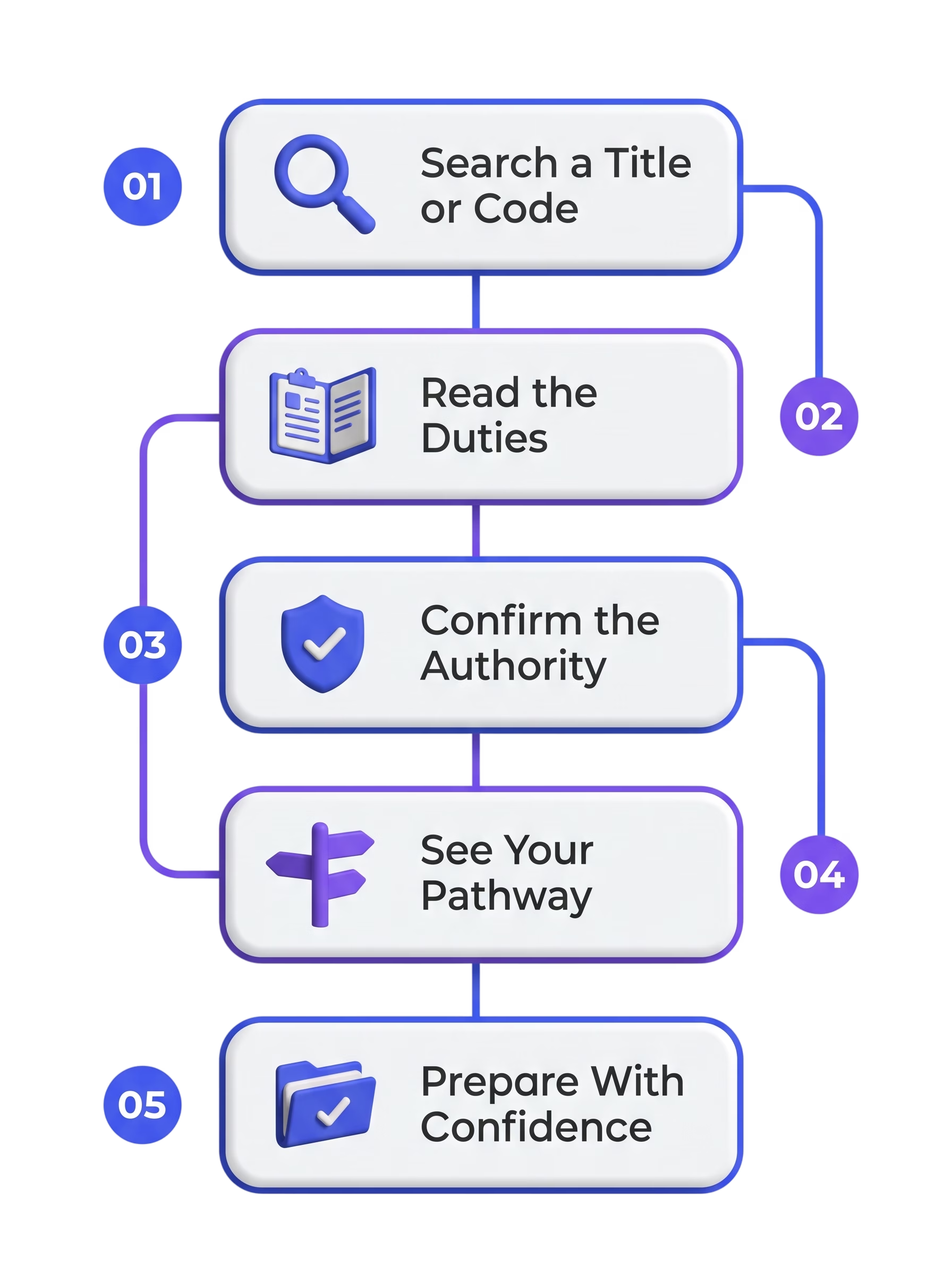
Going from a job title to a confirmed occupation takes only a few seconds. These five steps land you on the correct code, the right assessing body, and a clear next action before you begin writing.
Enter your job title, a keyword for the work you do, or a code you already have. Matching occupations appear as you type.
Open a result and read its official duties. Assessors weigh those duties against your experience, so the description carries more weight than the label on your contract.
Note whether Engineers Australia, ACS, TRA, or an accounting body reviews your occupation. Each one asks for a different set of documents.
Find out if your code leads to a CDR, an ACS RPL report, a TRA trade assessment, or a professional membership application.
Use the recommended next step to gather the right evidence and build your report around the correct occupation from the very start.
One six digit code quietly decides who assesses you, which report you write, and whether your evidence lines up. A few minutes spent confirming it protects weeks of preparation.
Your code routes your file to a specific body. Engineering goes to Engineers Australia, ICT to ACS, and trades to TRA. Send it to the wrong place and you start over.
A CDR, an ACS RPL, a TRA assessment, or a membership application. The occupation you nominate, not your preference, decides which one you owe.
Assessors read the official duties against your experience. The closer your real work sits to that description, the stronger and more defensible your claim becomes.
Your resume, references, and reports all have to point at the same occupation. A single conflicting detail is enough to invite extra questions.
The occupation you choose should sit inside the skill area of your qualification. Assessors look closely at how well your degree supports the code.
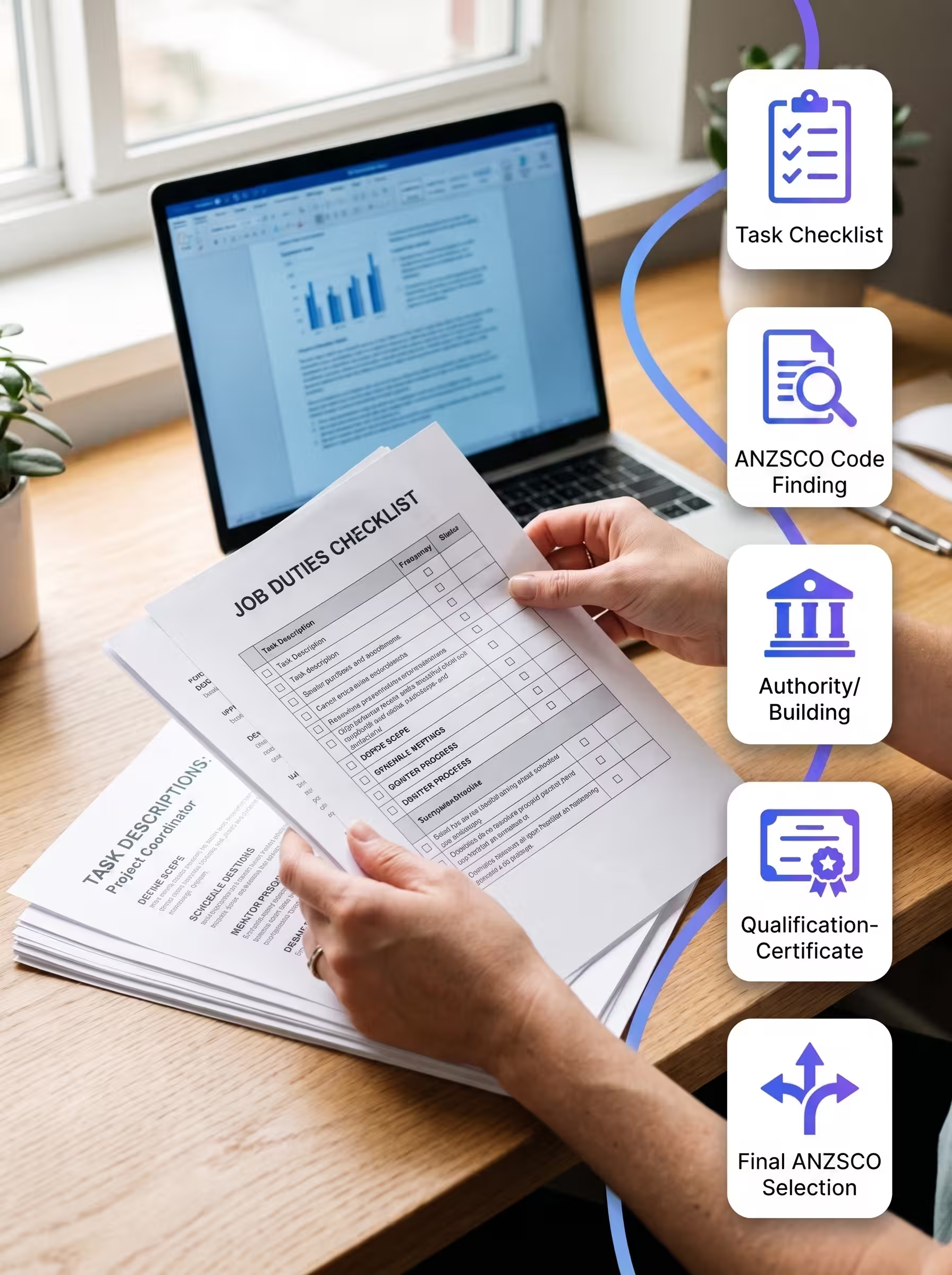
List the technical tasks you handle in a typical week. Then look for the occupation whose duties describe that work most closely. The tasks decide the code.
Company titles vary a lot. Two people who share a title can sit under two different codes, so always test your title against the official duties before you trust it.
These two paths ask for different CDR templates and competency elements. Your degree and the depth of your design work usually point to the one that fits.
Once you settle on a code, note who assesses it. That single detail decides which report you write and what evidence you need to collect.
Your study background should support the occupation you choose. A gap between your degree and your code is one of the first things an assessor looks for.
Fixing the occupation early saves you from rewriting Career Episodes or project reports later. Confirm the code, then commit to it and build around it.
Anyone who needs to lock in an occupation before a skills assessment will find their answer here, whatever field they work in and whichever report is coming next.
Settle on Professional Engineer, Technologist, or Associate before you outline your Career Episodes and Summary Statement, so every element targets the correct category.
Pin down the ACS occupation that matches your role so your two project reports prove the exact knowledge areas ACS expects to see.
When your title does not map neatly to any occupation, search by the work itself and compare duties until one code clearly fits what you do.
See whether TRA or an accounting body handles your case, and learn the evidence or membership step that comes next for your occupation.
A quick reference for popular ANZSCO codes across engineering, ICT, accounting, and trade occupations. Click any tab to switch categories.
| Occupation | ANZSCO Code | Assessing Authority | Category |
|---|---|---|---|
| Engineering Manager | 133211 | Engineers Australia | Prof. Engineer |
| Civil Engineer | 233211 | Engineers Australia | Prof. Engineer |
| Structural Engineer | 233214 | Engineers Australia | Prof. Engineer |
| Mechanical Engineer | 233512 | Engineers Australia | Prof. Engineer |
| Electrical Engineer | 233311 | Engineers Australia | Prof. Engineer |
| Chemical Engineer | 233111 | Engineers Australia | Prof. Engineer |
| Biomedical Engineer | 233913 | Engineers Australia | Prof. Engineer |
| Environmental Engineer | 233915 | Engineers Australia | Prof. Engineer |
| Telecommunications Engineer | 263311 | Engineers Australia | Prof. Engineer |
| Engineering Technologist | 233914 | Engineers Australia | Eng. Technologist |
| Civil Engineering Technician | 312212 | Engineers Australia | Eng. Associate |
| Electrical Engineering Technician | 312312 | Engineers Australia | Eng. Associate |
Most unsuccessful assessments trace back to a small handful of avoidable errors. Each one has a simple fix, so put them right before you commit to a code.
A familiar sounding title gets treated as proof of a match, with no check against what the occupation actually covers.
Read the official duties. Confirm the occupation description reflects the work you actually do before you accept the code.
The occupation description is scanned quickly or skipped, so a real gap between your tasks and the code goes unnoticed.
Compare it point by point. Work through the duties one at a time, because that is exactly how an assessor reviews the fit.
A CDR is drafted when the role actually needs an ACS RPL, or the reverse, and weeks of work end up pointed at the wrong body.
Confirm who assesses you first. Note the assessing body from the result, then follow its own document rules.
A code is chosen that your degree or trade study cannot support, leaving a gap the assessor is trained to spot.
Match the code to your study. Pick an occupation that sits inside the skill area your qualification clearly backs up.
Your resume, letters, and reports name slightly different occupations, and the inconsistency raises questions.
Keep every document consistent. Point your resume, references, and reports at the same nominated occupation from the start.
The occupation is changed after Career Episodes or project reports are drafted, forcing a rewrite of large sections.
Decide before you write. Lock the code in first, then build all of your evidence around it a single time.
Getting the occupation right is where a successful skills assessment begins. Talk to a writer who can match your duties, qualifications, and experience to the correct code before you invest time in a CDR or RPL.
Quick answers about ANZSCO codes, job title matching, assessing authorities, CDR and RPL alignment, and visa eligibility.