Meets the 150 Hour Minimum
Engineers Australia expects at least 150 hours over three years. Tracking as you go means you reach the target without a last minute scramble.

Build and format your Engineers Australia Continuing Professional Development log. Entries save in your browser automatically. Track your hours toward the 150 hour minimum, check the three year window, and export a clean CSV or printable log ready for your CDR.
Add each professional development activity from the past three years. Aim for at least 150 hours of relevant CPD with a healthy mix of formal, informal, and self-directed learning.
Only CPD completed within the three years before your CDR submission counts toward the 150-hour minimum. Older activities can still be listed but are flagged and excluded from the valid hour count.
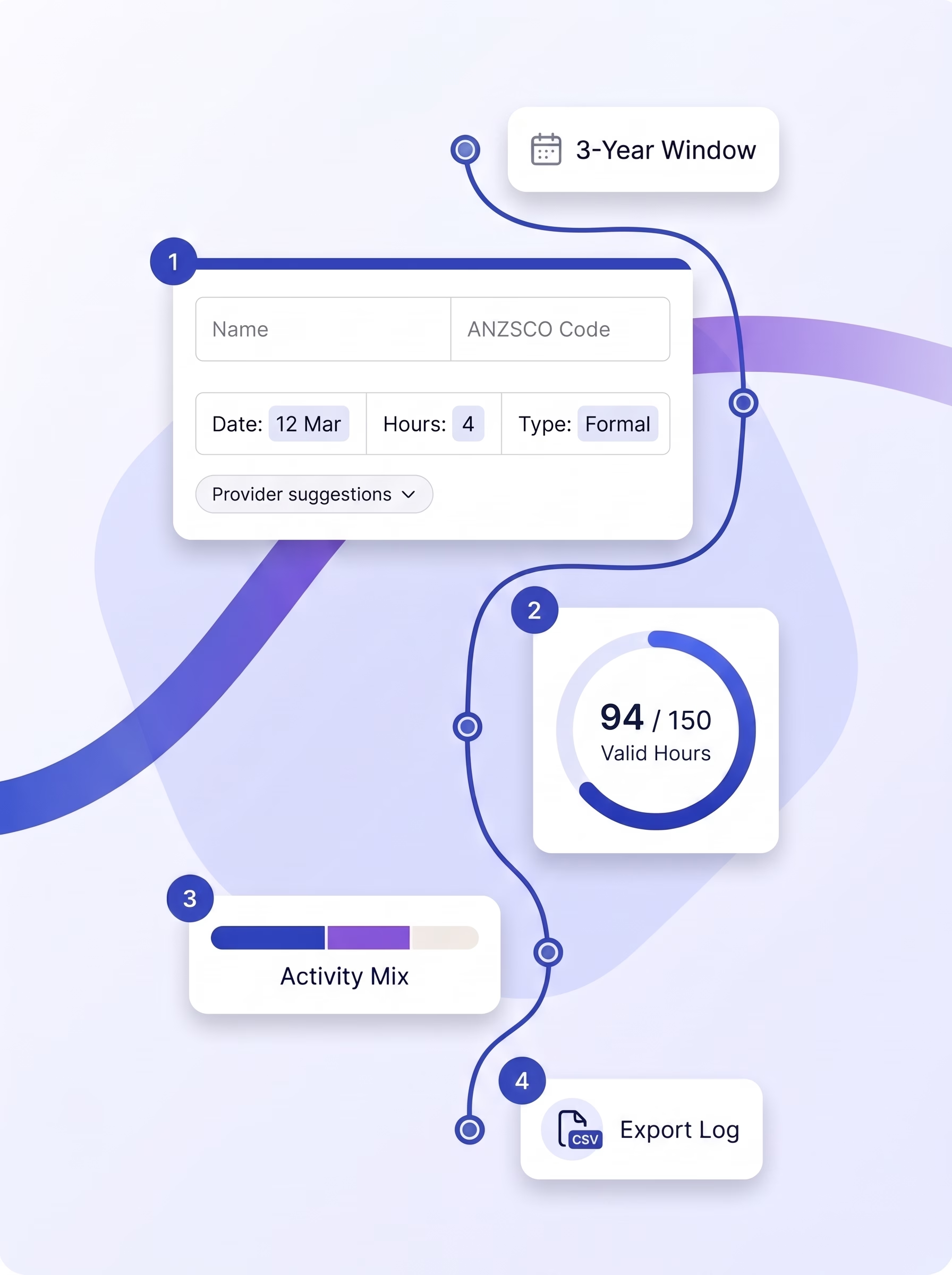
Add each activity from the past three years and the tool formats a clean CPD log for you. It tracks your hours toward the 150 hour minimum, checks the three year window, shows your activity mix, and exports a CSV or printable log for your CDR.
Enter your name and ANZSCO code once. They sit in the header of your exported log so it is ready to attach to your CDR.
Record the date, hours, type, activity, provider, and learning outcome. The provider and ANZSCO fields suggest common options as you type.
Watch your valid hours climb toward 150. Entries older than three years are flagged and left out of the valid count.
See how your hours split across formal, informal, and self directed learning, so your log looks balanced to an assessor.
Download a CSV, copy the text, or print a formatted log. Everything is saved in your browser, so you can come back to it later.
Your CPD log proves to Engineers Australia that you have kept your engineering knowledge current since you graduated. A clear, complete log supports your assessment and shows you stay active in your field.
Engineers Australia expects at least 150 hours over three years. Tracking as you go means you reach the target without a last minute scramble.
Only the last three years count. A log that clearly marks the valid period keeps your hour total honest and easy to check.
A blend of formal, informal, and self directed learning reads far stronger than a log built from one activity type alone.
CPD that links to your nominated ANZSCO occupation carries the most weight. A focused log supports the competencies you claim.
Engineers Australia expects a clear table with date, activity, hours, and provider. Exporting that format saves you rework at submission.

Only activities completed in the three years before your submission count toward the 150 hours. The tool flags anything older so your valid total stays accurate.
Accredited short courses, postgraduate units, and structured training all count. Record the provider and the hours you spent on each one.
Webinars, workshops, in house training, technical talks, and site visits are all valid. These are easy to forget, so log them as you go.
Reading standards, technical journals, and manuals, or learning new engineering software, counts as self directed CPD. Note the topic and the time spent.
Most of your CPD should link directly to your nominated engineering occupation. A little general development is fine, but keep the focus technical.
You usually do not attach a certificate for every activity, but keep proof safe in case Engineers Australia asks for an audit later.
This tool suits any engineer preparing a Competency Demonstration Report who needs a tidy, compliant CPD record without wrestling with spreadsheets.
Build your log one activity at a time, with prompts for the fields Engineers Australia wants, so nothing important is left out.
See exactly how many valid hours you have and how far you are from the target, so you know how much more CPD to add.
Paste in your existing activities and let the tool flag anything outside the three year window before you submit.
Turn a rough list into a clean CSV or printable log that drops straight into your CDR package.
Not sure what to include? These are the most common valid CPD activities, grouped by the way Engineers Australia looks at them.
Accredited short courses, postgraduate units, and structured training programs related to your engineering field.
Industry conferences, symposiums, technical talks, and professional networking events with engineering content.
In house training, vendor workshops, technical presentations, and site visits delivered at or through your workplace.
Reading technical journals, standards, and manuals, doing online research, or learning new relevant engineering software.
Mentoring junior engineers, volunteering on engineering committees, or reviewing technical papers for your field.
Publishing technical papers or articles, and presenting research or case studies at engineering events.
A CPD log can look full yet still fall short. Check your record against these common mistakes before you attach it to your CDR.
Do not count CPD from more than three years ago toward your 150 hours. The tool marks those entries so they do not inflate your valid total.
Do not list coursework from your qualifying degree. CPD must be professional development you did after you graduated.
Do not fill your log with a single type of learning. A mix of formal, informal, and self directed activities reads far stronger.
Do not pad the log with unrelated training. Most of your CPD should tie directly to your nominated engineering occupation.
Do not write a bare activity name with no detail. Add the provider, the hours, and a short learning outcome for each entry.
Do not rely only on your browser. Download the CSV regularly so a cleared cache or a new device does not wipe your record.
We write full CDR reports including the three Career Episodes, the Summary Statement, and a well-rounded CPD log that meets Engineers Australia requirements.
Get quick answers about your Engineers Australia CPD log requirements.