Evidence Is Easy to Find
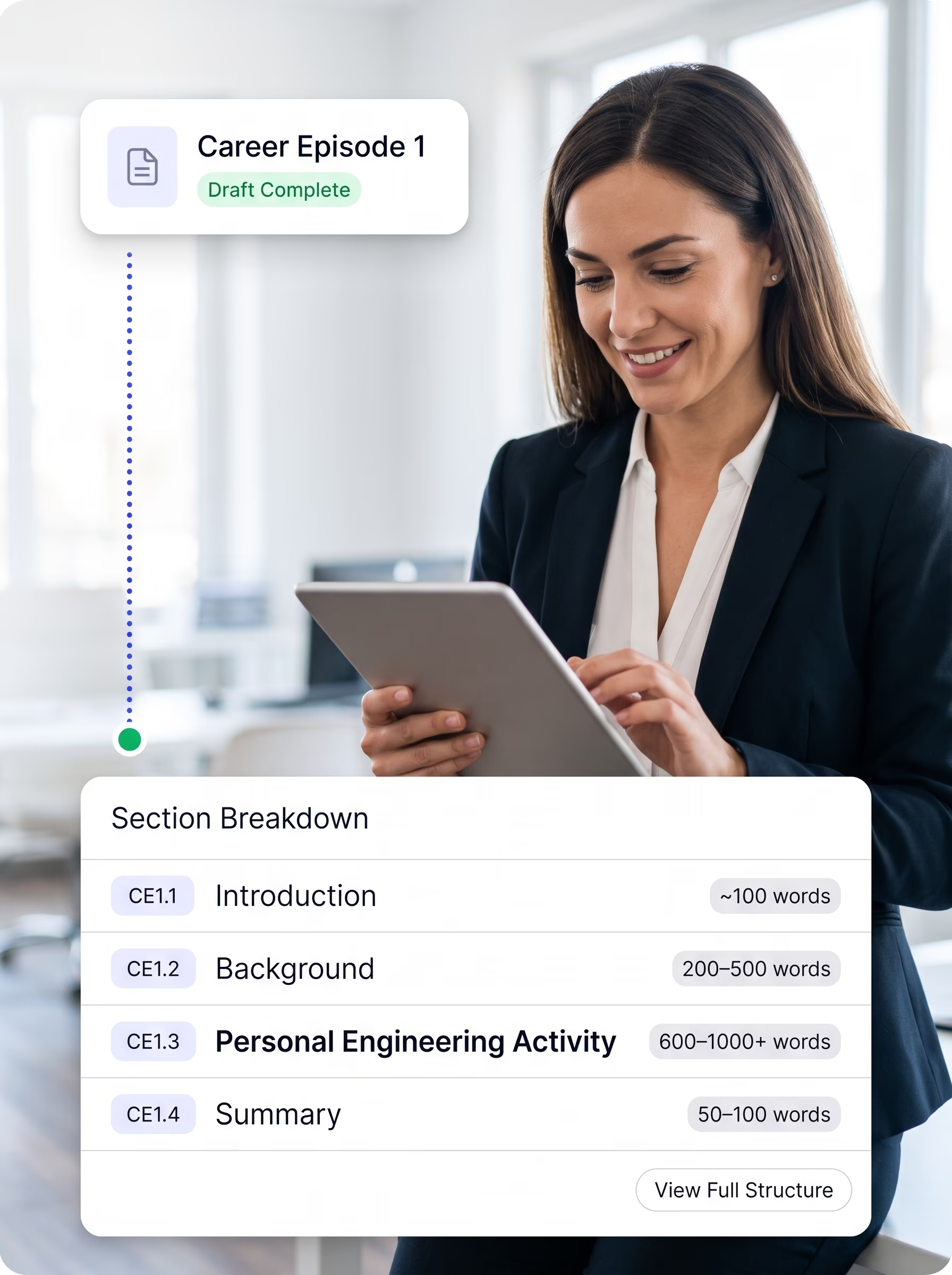
Clear sections separate context, role, technical activity, and outcome, so an assessor can locate each competency without hunting through the text.

Paste your Career Episode and get a full structural read in seconds, covering word count, first person language, paragraph numbering, passive voice, and Engineers Australia section structure, all before you submit your CDR.
Add up to three Career Episodes, paste your text in full or section by section, then run a detailed structural review against EA compliance checks.
Each Career Episode is analysed on its own and never combined. Add up to three episodes using the tabs. Select an episode, then click Analyse to see that episode's result. Switching tabs hides the current result, so analyse each episode separately to review its individual score.
Nothing is uploaded. All checks run locally in your browser.
This tool checks measurable structural properties. It does not assess engineering content quality, competency depth, or originality. Always have your complete CDR reviewed by an expert before submission.
The checker reads your text the way an assessor scans structure. It measures each requirement, scores five readiness dimensions, and lists exactly what to fix before you map your Summary Statement.
Work on up to three Career Episodes in one place. Each one is analysed on its own and never mixed with the others.
Drop in the whole episode, or fill the Introduction, Background, Personal Engineering Activity, and Summary one section at a time.
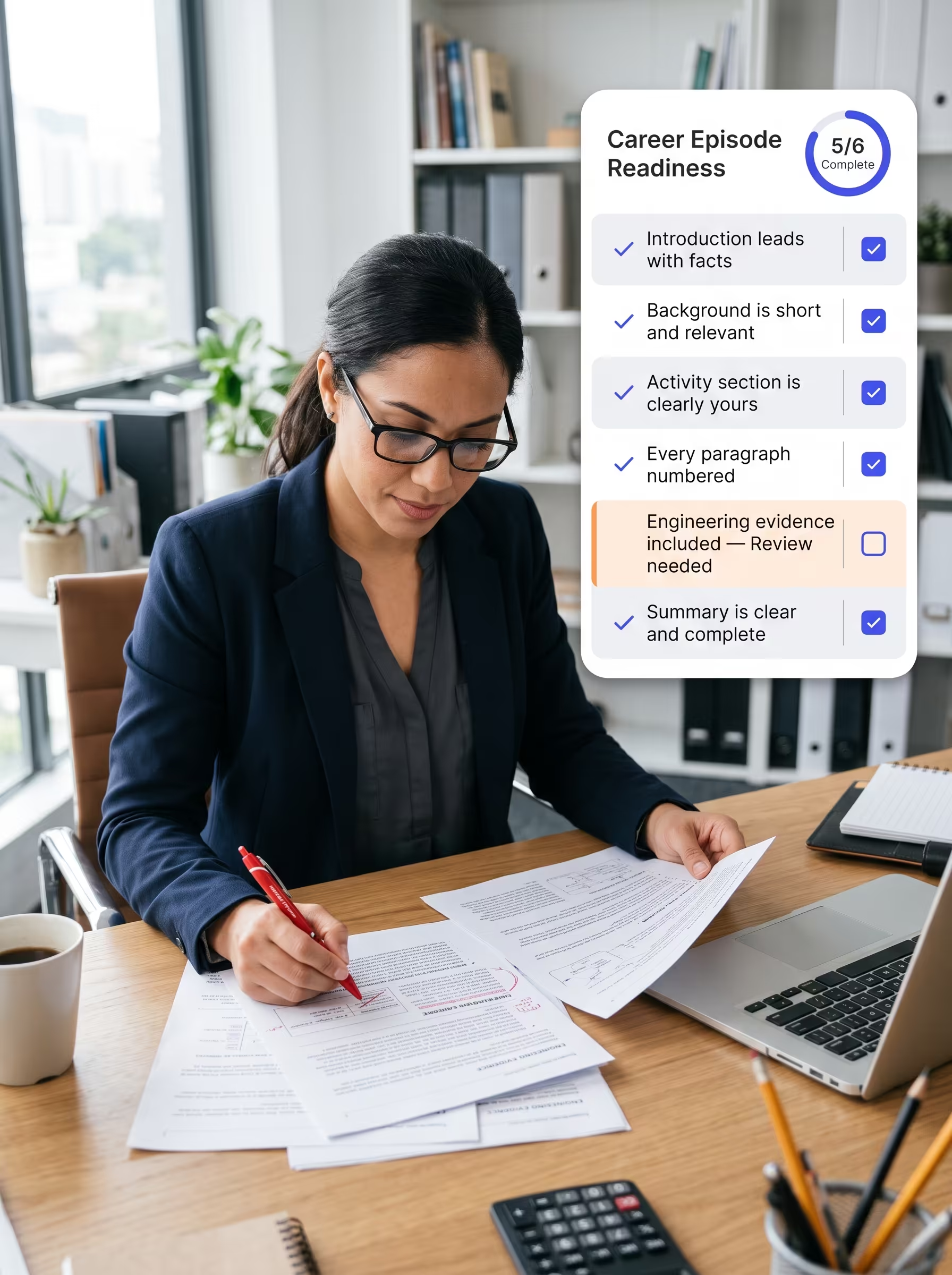
The tool checks word count, first person density, team pronouns, numbered paragraphs, passive voice, and section coverage.
See a weighted score across five dimensions, a clear metric grid, and a ranked list of issues to fix first.
Strong evidence paragraphs are surfaced with suggested competency elements, ready for your Summary Statement mapping.
A well structured Career Episode lets assessors find your competency evidence quickly and lets you map it cleanly into the Summary Statement. Weak structure hides good engineering and slows your assessment.
Clear sections separate context, role, technical activity, and outcome, so an assessor can locate each competency without hunting through the text.
First person writing keeps you at the centre of the work. Assessors reward a clear personal contribution over a team narrative.
Numbered paragraphs let you point each competency element to the exact place the evidence appears, which is required for a valid Summary Statement.
Structure makes room for calculations, standards, tools, and design decisions, which is the technical depth that demonstrates real engineering.
A systematic layout exposes missing details early, so you fix gaps before submission instead of after a negative outcome.
Open with the project title, dates, duration, location, employer, and your position. Assessors need this context before any technical detail begins.
State the project objective, the engineering context, and your assigned duties. Leave out long company history that adds no engineering value.
This is the largest section. Write in first person and show what you analysed, designed, calculated, tested, and decided. Replace we and the team with I.
Number your paragraphs in order, such as 1.1, 1.2 and 1.3 for Episode 1. The Summary Statement cross references these numbers, so gaps make mapping impossible.
Back your decisions with calculations, standards, tools, and measurable results. Numbers and codes turn description into evidence an assessor can trust.
End with your personal contribution, the project outcome, and the competencies you demonstrated. Keep it specific rather than a general reflection.
This tool suits any engineer preparing a Competency Demonstration Report who wants an honest structural read before spending hours on final writing or Summary Statement mapping.
See exactly what a compliant episode looks like, then check your draft against word count, numbering, and section coverage before you commit.
Pinpoint the structural reasons behind a negative outcome, such as team pronouns, thin evidence, or missing paragraph numbers, and fix them fast.
Confirm your writing meets Engineers Australia expectations for first person voice and structure, whichever engineering discipline you nominate.
Make sure each episode is numbered and evidence rich, so mapping competency elements later becomes a smooth, quick step.
Each Career Episode follows a logical structure. Use this table to check the length and focus of every section before you run the analysis.
| Section | Approx. Length | What to Include | Common Mistake |
|---|---|---|---|
| Introduction | 50 to 100 words | Project title, dates, duration, location, employer, and your role. | Missing dates, location, or job title that assessors need for context. |
| Background | 150 to 250 words | Project objective, engineering context, team structure, and your duties. | Loading the section with company history instead of the engineering purpose. |
| Personal Engineering Activity | 700 to 2,000 words | Your calculations, analysis, designs, standards, tools, decisions, and problem solving. | Describing team actions with we instead of your own contribution with I. |
| Summary | 50 to 150 words | Your contribution, the project outcome, and the competencies you demonstrated. | Skipping the summary or keeping it too generic with no personal outcome. |
Always review the latest Engineers Australia migration skills assessment instructions before you lodge your CDR application.
A Career Episode can look finished yet still fail to show strong evidence. Check your draft against these errors before you move to final review.
Do not simply list duties. Explain a real engineering activity, the problems you handled, and the results of your decisions.
Assessors need your personal contribution. Use I to show your own actions instead of making every task read as a team achievement.
Do not overload the background with company history. Keep it focused on the project, your role, and the engineering context only.
Unnumbered paragraphs make Summary Statement mapping impossible. Number every paragraph before you build the competency matrix.
General statements are not enough. Include the tools, standards, calculations, constraints, and reasoning behind your work.
The summary must explain the result of the project and how your personal contribution helped achieve it.
Get your episode checked for structure, first person writing, technical depth, paragraph numbering, and Summary Statement readiness before you submit to Engineers Australia.
Quick answers about CDR Career Episode structure, word count, paragraph numbering, first-person writing, and Summary Statement mapping.